
What Costa Blanca Property owners need to know
Let’s be honest—nobody dreams of discussing sewage tank overflow when enjoying their villa’s sea views. Yet ignoring this rather unglamorous reality can transform your Mediterranean paradise into an expensive nightmare faster than you can say «pozo negro». If you’re experiencing a sewage tank overflowing situation, you’re not alone, and more importantly, you’re likely facing regulatory requirements that demand immediate attention.
Sewage tank overflow in Spain
A sewage tank overflow occurs when your septic system can no longer contain or properly process wastewater. This messy predicament typically results from inadequate maintenance, undersized tanks, or outdated systems that simply weren’t designed to meet modern environmental standards.
In the Valencian Community, property owners should schedule regular septic tank emptying every three to five years to prevent overflow problems and maintain proper system functioning. Neglecting this schedule isn’t merely inconvenient—it’s potentially illegal and environmentally damaging.
Common causes of sewage tank overflowing
Several factors contribute to sewage tank overflowing scenarios:
- Poor maintenance: Failing to empty tanks on schedule allows solids to accumulate
- System age: Older «black hole» tanks lack proper filtration chambers
- Heavy rainfall: Combined systems handling both stormwater and sewage become overwhelmed
- Inappropriate disposal: Flushing wipes, fats, or chemicals damages bacterial processes
- Undersized capacity: Systems installed decades ago may not cope with current household demands
Current Spanish and EU regulations
The Valencian Community employs a blend of European, national, and regional regulations, with specific local ordinances tailored to address unique challenges in municipalities like Dénia, Jávea, and Oliva. This multi-layered framework exists precisely to prevent sewage tank overflow incidents that threaten public health and environmental quality.
Properties within 100 metres of the municipal sewer network must connect to it according to Sanitation and Wastewater Discharge Regulations. If connection proves impossible, sealed or modern bio-treatment tanks are mandated, typically positioned between five and eight metres from buildings.
Key regulatory requirements include:
- CE-certified bio-septic tanks replacing traditional soakaway systems
- Habitation Certificate (Certificado de Habitabilidad) demonstrating compliance
- Professional installation with proper documentation for town hall approval
- Regular emptying by licensed contractors who dispose of waste legally
From March 2022, it became mandatory for residents in certain municipalities to connect homes to sewer networks and deactivate septic tanks, with non-compliance resulting in fines.
Where these regulations apply across Costa Blanca
Whether you’re in Jávea, Calpe, Moraira, Benissa, Dénia, or Altea, similar environmental standards govern wastewater management. Properties throughout Benidorm, Gandía, Oliva, Pego, Pedreguer, Benidoleig, Orba, Gata, Jalón, La Nucía, Alfaz, El Albir, Finestrat, Villajoyosa, El Campello, Torrevieja, Alicante, Quesada, Villa Martín, and La Marina must comply with Valencian Community directives alongside municipal ordinances.
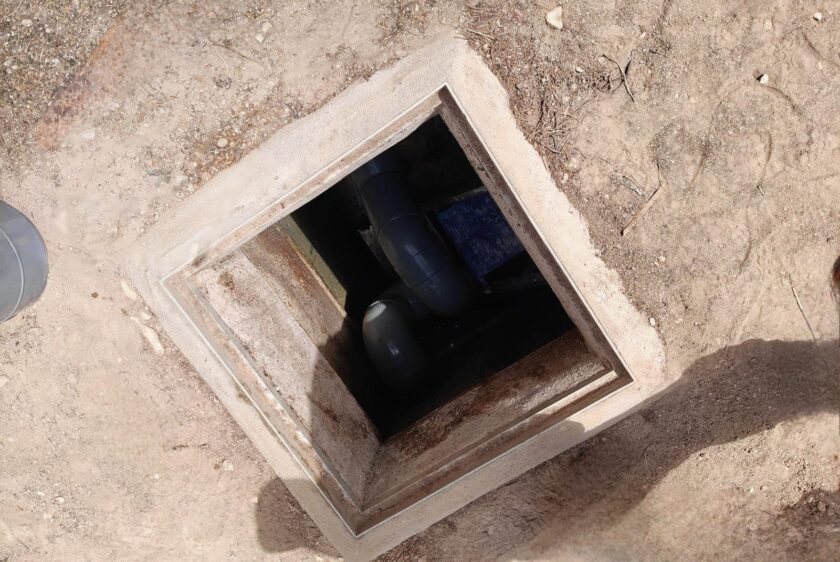
Consequences of ignoring sewage tank overflow
Turning a blind eye to sewage tank overflow warnings creates a cascade of increasingly severe problems:
- Environmental damage occurs first. Raw sewage contaminating groundwater threatens local water supplies and Mediterranean coastal waters. The Valencian Community takes environmental protection seriously—for good reason.
- Health hazards multiply rapidly. Sewage contains pathogens causing serious illnesses. Children playing in gardens, pets investigating strange smells, and even neighbouring properties face exposure risks from untreated wastewater.
- Legal penalties follow environmental violations. Municipal authorities can impose substantial fines for non-compliant systems. More critically, without proper certification, you cannot legally sell your property in the Valencian region—transforming regulatory non-compliance into a financial straitjacket.
- Property damage extends beyond immediate overflow areas. Sewage infiltration damages foundations, kills vegetation, and creates persistent odour problems that decrease property values dramatically. What begins as a maintenance issue becomes structural devastation.
- Insurance complications often surprise property owners. Many policies exclude coverage for damage resulting from poor maintenance or known defects. That sewage tank overflowing you’ve been meaning to address might leave you personally liable for extensive remediation costs.
«Prevention beats remediation every time—especially when dealing with sewage and regulatory compliance simultaneously.»
Preventing sewage tank overflow emergencies
Prevention requires consistent attention but saves enormous hassle compared to emergency responses:
Establish a maintenance schedule
Professional inspections annually identify potential issues before they become emergencies. Between inspections, monitor warning signs: slow drainage, unpleasant odours, soggy ground near the tank, or gurgling sounds from plumbing fixtures.
Empty tanks appropriately
Following manufacturer recommendations—typically every three to five years—prevents solid accumulation that causes blockages and overflow. Licensed contractors ensure waste disposal meets environmental regulations whilst documenting compliance for property records.
Upgrade outdated systems
EU legislation now requires properties not connected to mains sewerage to have eco-certified septic tanks installed, replacing old non-conforming installations known as «posa negra» or black holes. These outdated systems allow waste to permeate surrounding soil, creating environmental hazards that violate current European regulations throughout the Valencian region.
Modern bio-septic tanks feature multiple filtration chambers that produce environmentally safe effluent. Some systems even produce grey water suitable for irrigation—transforming a compliance requirement into an environmental benefit.
Educate household members
What enters your drains directly impacts system performance. Avoid flushing wipes (even those labelled «flushable»), sanitary products, cotton buds, or excessive toilet paper. Never pour fats, oils, or harsh chemicals down drains—these substances kill beneficial bacteria essential for waste breakdown.
What to do if your sewage tank is overflowing
Experiencing sewage tank overflow right now? Don’t panic—but do act quickly:
Immediate steps:
- Stop using all plumbing fixtures to prevent additional overflow
- Keep children and pets away from affected areas
- Contact emergency drainage specialists immediately
- Document the situation with photographs for insurance purposes
- Avoid attempting DIY fixes that might worsen contamination
Professional resolution:
Qualified drainage experts possess the equipment and expertise to address sewage tank overflowing emergencies safely. Emergency response services throughout Costa Blanca provide:
- 24-hour emergency callouts for urgent overflow situations
- Tank emptying using specialized vacuum lorries
- System assessment to identify underlying causes
- Regulatory compliance advice for upgrades and certifications
- Installation services for modern bio-treatment systems
Long-term solutions and system upgrades
Addressing sewage tank overflow properly means looking beyond immediate fixes. System assessments reveal whether repairs suffice or complete replacement becomes necessary.
When repairs are appropriate:
Minor issues like damaged baffles, cracked inspection covers, or blocked outlet pipes often respond well to targeted repairs. Regular maintenance following repairs extends system lifespan considerably.
When replacement is necessary:
Undersized tanks, deteriorated structural integrity, or systems lacking proper filtration chambers typically require complete replacement. Modern installations must meet current CE certification standards and receive town hall approval.
Compliance documentation:
Maintaining comprehensive records of inspections, emptying services, and system upgrades proves essential for property transactions. The Certificado de Habitabilidad requires documented proof of compliant wastewater management.

Choosing professional drainage services wisely
Not all drainage companies offer equivalent expertise or regulatory knowledge. When selecting professionals to address sewage tank overflowing issues, verify they provide:
- Licensed operation with proper insurance coverage
- Emergency response capability across your area
- Regulatory expertise regarding Valencian Community requirements
- Comprehensive services from emptying through system replacement
- Documentation support for town hall submissions
Properties across Jávea, Calpe, Benissa, Dénia, Altea, Benidorm, Gandía, and throughout Costa Blanca deserve reliable drainage solutions that prevent emergencies whilst maintaining regulatory compliance. Regular professional maintenance transforms sewage systems from potential disasters into forgettable background infrastructure—exactly as they should be.